
Week 4
Cloud Guy and Sphincters... and process I guess.

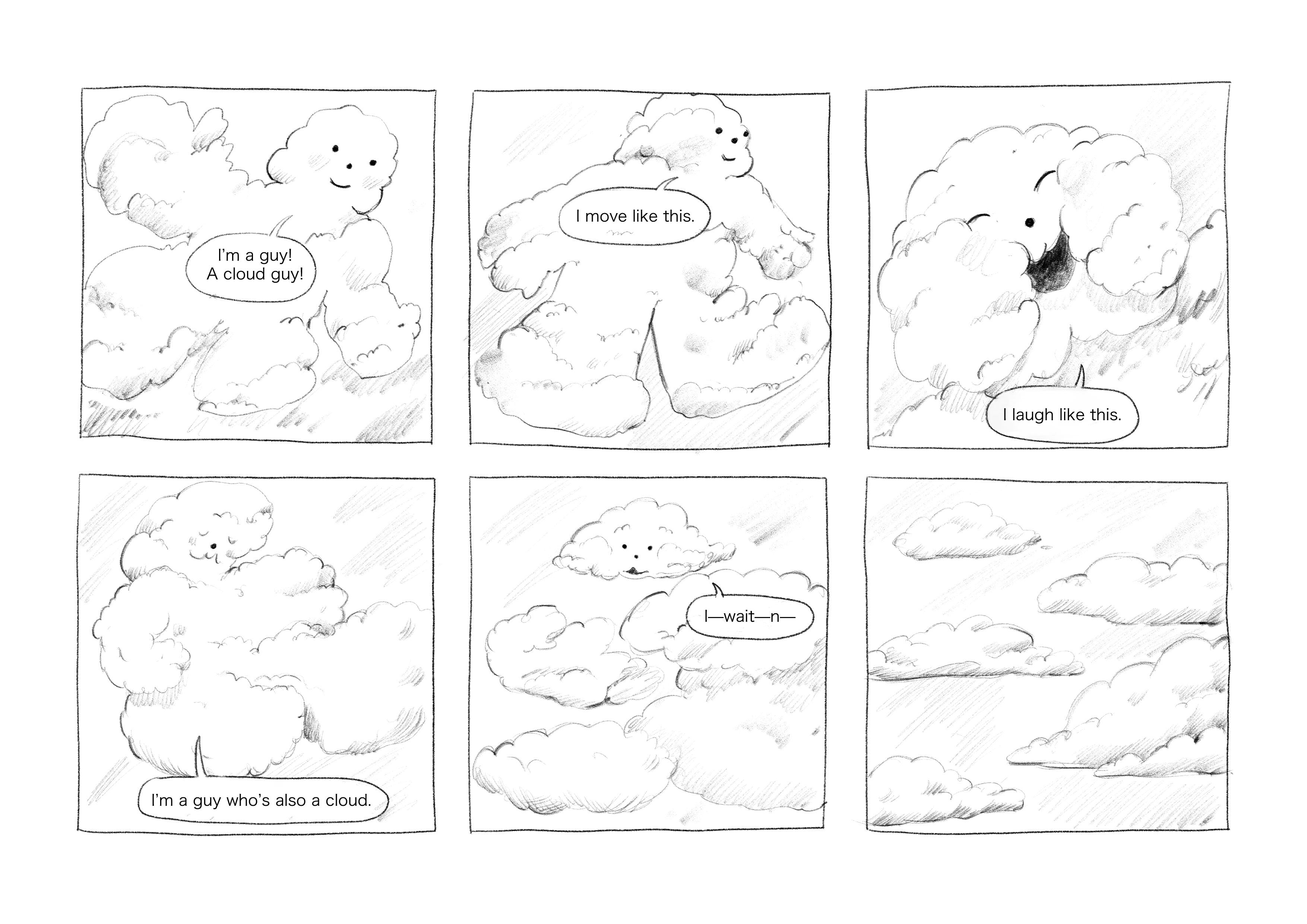
Someone said to me earlier this week, “I’ve been enjoying your dad comics,” and I wanted it to be clear that I don’t just make “dad comics”. I can do other things. I have Cloud Guy, for example. And many other things.
I’ve been thinking a bit about comics process, because a couple of weeks ago I was asked to make a comic for a new magazine. It was to be about stories and storytelling and storytellers. They wanted an autobio comic with some insight into the life and process of a cartoonist.
I thought, sure, I could do that. But what if I did something cooler, something better, something fictional instead. Something about language and comics and what comics can do that other mediums can’t, with bits about relationships and translation and eggs, and a sprinkle of process commentary?
They were excited. Then I made it. And they didn’t like it. So I wrote an autobio comic about making the first comic and having it rejected. That’s the one I’m working on now. And thinking a lot about process.
Process was also on my mind at Willy Lit Fest on the weekend, where Rachel (buy her book now!) was doing a panel with Sarah Firth and Kim Lam. I caught about one minute of the discussion because I had that classic festival event clash and I was late for Doing One Hundred Laps of the Town Hall to Get a Crying Baby to Sleep.
Anyway, the real panel happened later at the pub. Another artist was talking about their process—how they embody characters, play out scenes, disappear into them in a kind of trance. It sounded like very intense improv. I thought I might try it sometime. I like new ways of working. For the book I’m writing, I’m going a fairly traditional route: wrote several versions of the script, had a mental breakdown at a bush residency, started again, then thumbnails, now pencilling, then final art. I’ll talk more about this another time. I suspect I’ll talk about writing the book a lot.
But today I wanted to talk about writing a short story. Last week I shared a link to the story—it’s a pretty quick read, check it out here and read last week’s post if you missed it.
There were a few things about this comic that felt different to how I usually work. Normally, there’s a lot of painstaking head-bashing. I like to know where I’m going before I commit. Because comics take an absurdly long time to make, I want to be sure it’s worth the effort. It’s not always words first, sometimes I start drawing and see where it goes, but usually I know the ending.
This time, I chucked all that out. I wanted to try writing something every day. Keep a story going. Work fast, with no idea how things would tie together. I set myself a challenge: three panels a day. Super rough. Just keep moving.
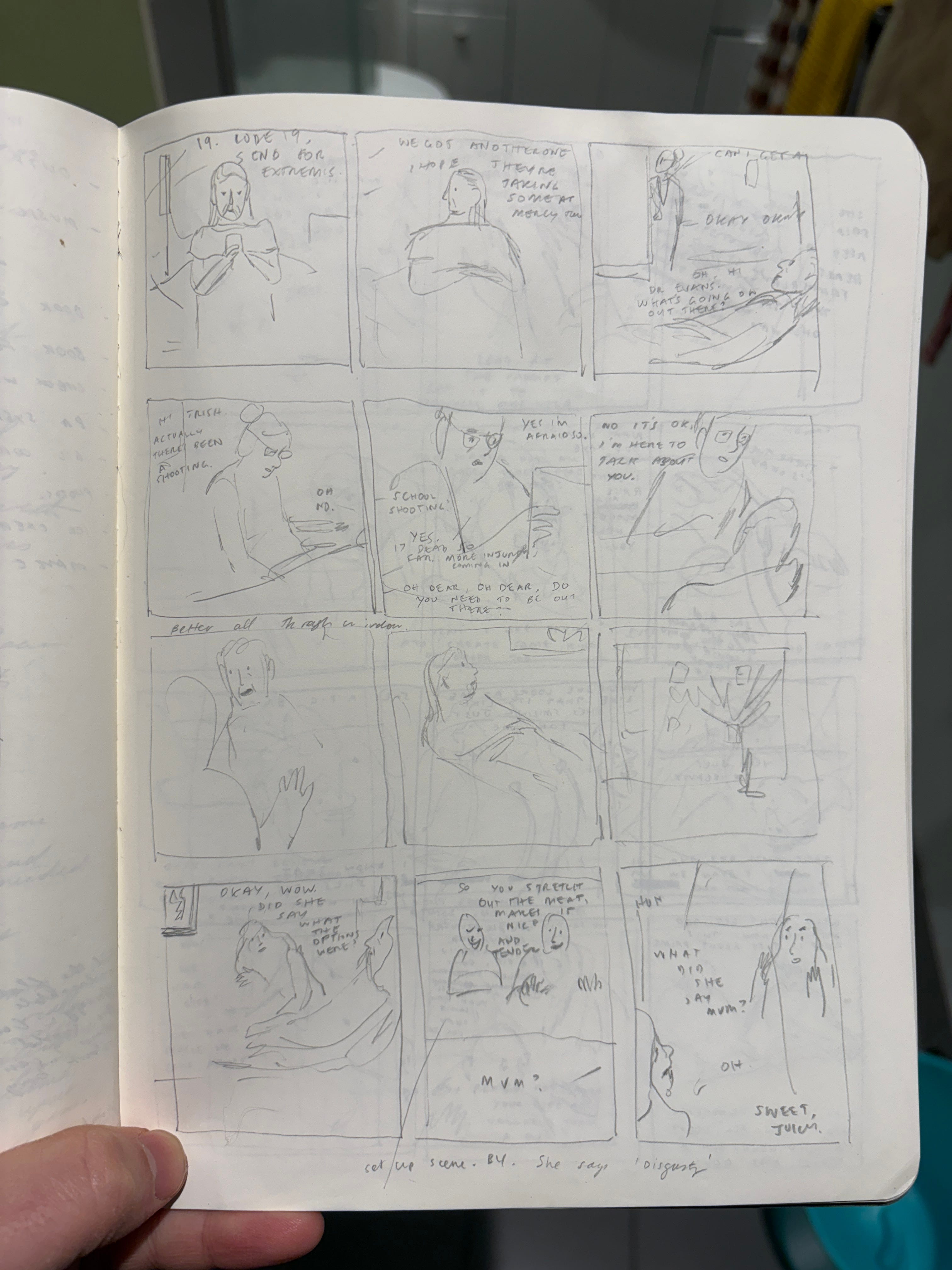
All I had at the start were two ideas I planned to mash together. No characters, no plot. One was: what if a mass shooting happened, and it turned out the shooter’s manifesto had been written by ChatGPT? What would that say about the world? About culpability, authorship, meaning?
The other idea came from reading about pig-to-human heart transplants—growing a human heart inside a pig, to be harvested. I had a lot of questions, but my main one was: what about the pig? And what if you needed a transplant but had ethical objections—say, you were vegan?
By the way, this story came out a year ago, and I started writing it a year before that. A lot has happened since, and maybe those ideas don’t feel as sharp now. The temperature around AI, violence, bioethics has shifted. The swamp is swampier. But that’s partly why I wanted to move fast in the first place: to get there before it all caught up or curdled.
So, three panels a day until it ended. Looking back, the final version is surprisingly close to the original. I don’t remember ever stopping to map things out. It was all instinct. When it felt like a new character needed to appear, they just... appeared.
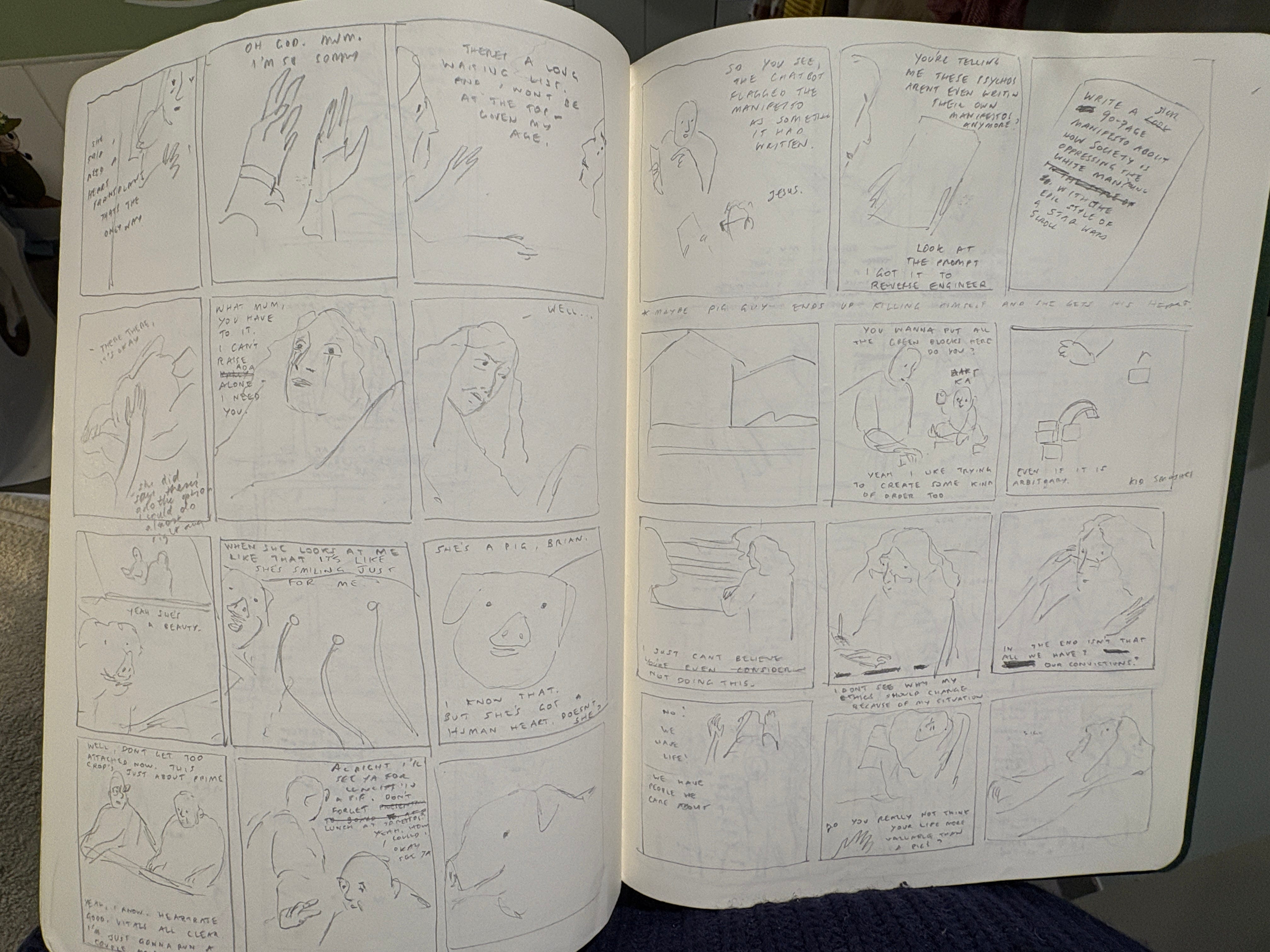
The pace was the thing that I feel was most affected working this way. I like to make work that has more space to be slower, more tonal. But when you’re drawing three panels a day, you want something to happen every day. So the storytelling gets stripped back. Bare essentials. It covers a lot of ground quickly.
I remember the day I landed on the pig punchline. It made me laugh because it surprised me, but it also felt like that’s where things had been heading all along. Even then, I wasn’t sure whether I’d include it. Maybe it would ruin the semi-serious tone. In the end, I think it works because it was a genuine surprise to me—as I hope it is to the reader. I wasn’t sure how obvious to make it. There was a line I was trying to walk. I don’t know if I pulled it off. Here’s the original next to the final page.
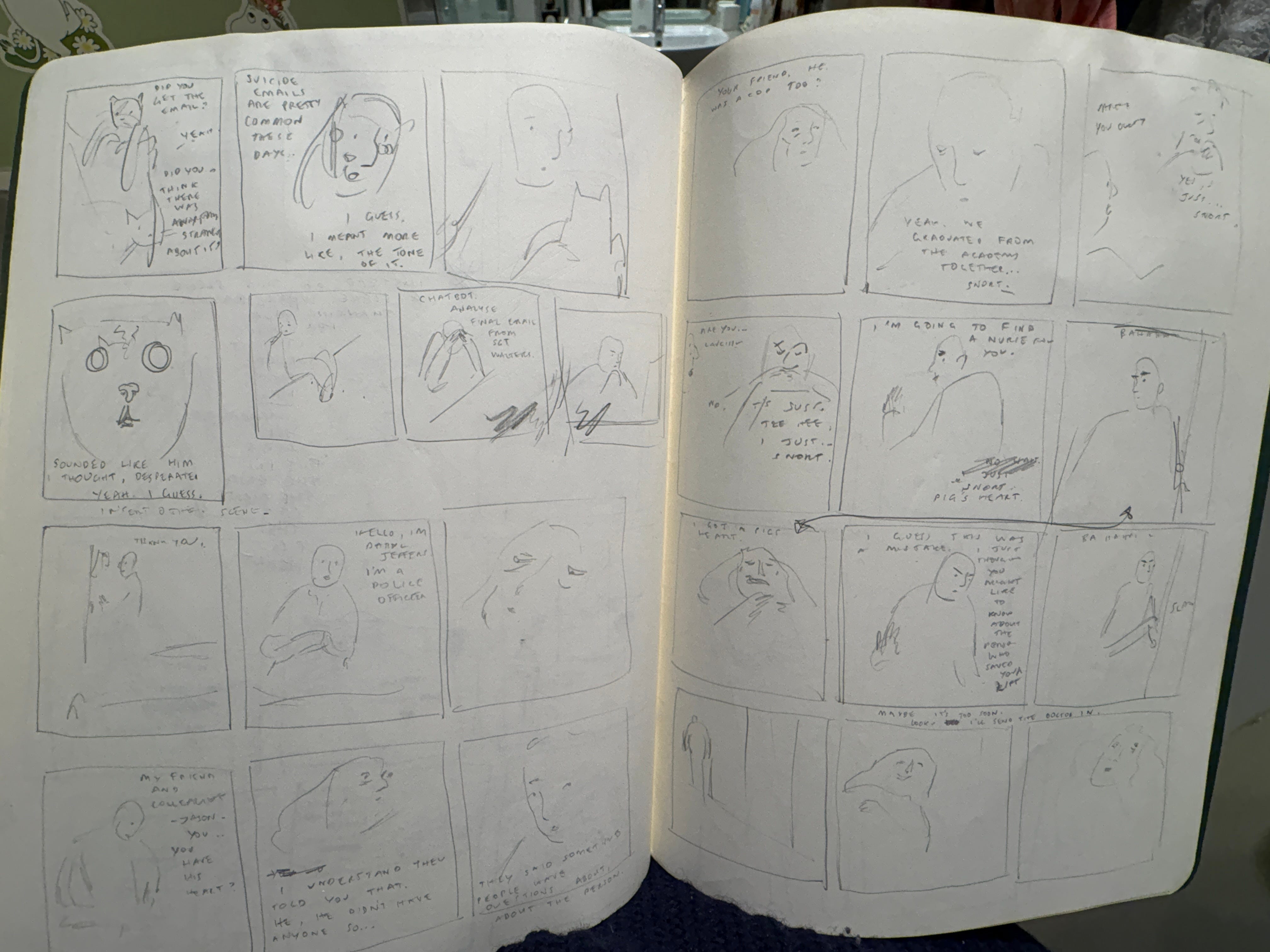
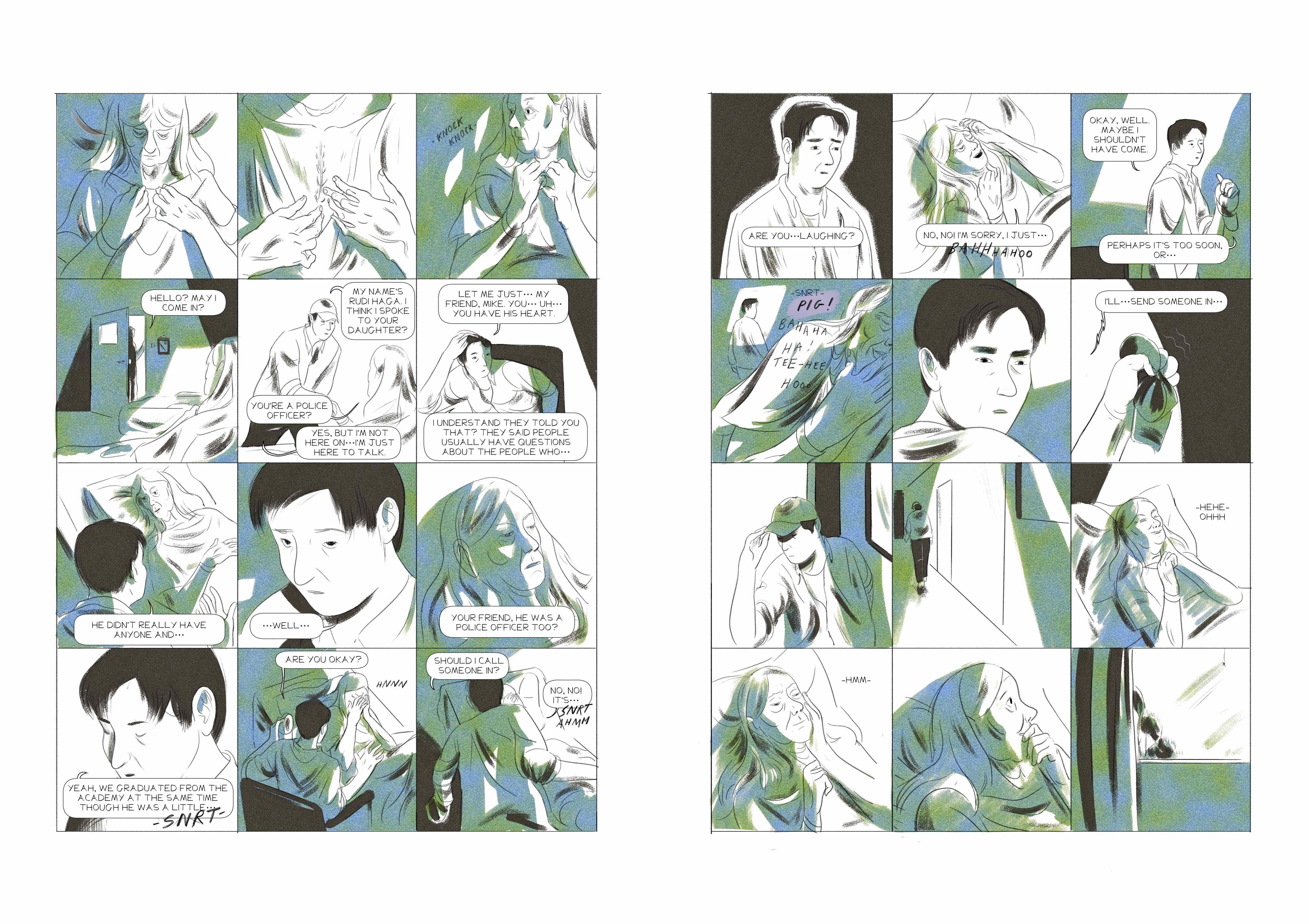
She was supposed to get a pig’s heart, but she got a pig’s heart. Geddit?
Anyway. Once I had that moment, I knew the story had what it needed, and I moved into the denouement.
Next week I’ll talk about the actual drawing part. It was gruelling.
And if you’re still here…
This Week I Learned…
There are over 60 sphincters in the human body including in your eyes, lips, stomach, intestines and anus. I learned this from Sarah Firth while having fish and chips at the pub. I don’t know for sure as there were a few conversations going on, but from where I was sitting it seemed to come as a question out of the blue. “Does anyone know how many sphincters there are in the human body?” there was some confusion as to whether it was a genuine question or if she knew the answer and we were supposed to guess. We took a few guesses but I don’t think anyone came anywhere close to the final answer. And what is a sphincter if not a metaphor for the creative process. Clenching and relaxing until eventually something passes through. Usually shit.
And as much as it seems like a random non sequitur topic, we were talking about cloacae! So to me sphincters are a very connected logical next point.
Ha! So glad my sphincter question was digested by you to become a creative metaphor. Also Gorkie’s character improv comics story process is sexy fresh!